


- Published
- Updated
What Is Tokenization in Search?
Learn how search engines split and normalize page text and queries into searchable terms, and why those choices can decide which pages reach ranking.
Your documentation contains a page named Rotate an API-key. The hyphen is intentional. A user searches for API keys.
The page is relevant, but search does not show it. You can first suspect the ranking settings. However, the problem can occur before ranking.
The search engine must convert the page text and query into comparable terms. Tokenization decides where one token ends and the next token starts.
What is tokenization in search?
Tokenization divides text into searchable pieces. Each piece is a token.
Search tokens are intermediate pieces in a text-analysis process. They are different from the subword tokens that a language model uses.
One configuration can produce these tokens:
Page: Rotate an API-keyTokens: [Rotate] [an] [API] [key]Query: API keysTokens: [API] [keys]The tokenizer uses spaces and the hyphen as boundaries. It does not make API and api equal. It also does not connect keys to key.
Lowercase conversion can make API and api equal. Stemming can connect keys to key.
A different tokenizer can keep API-key as one token. Another process can remove the hyphen first and produce APIkey.
Tokenizer settings determine which terms are available for matching. Therefore, punctuation can affect search results.
Tokenization is one part of text analysis
People sometimes call the complete analysis process tokenization. This article separates the stages so that you can examine each operation:
Page: characters → optional character filters → tokens → optional token filters → indexed termsQuery: characters → optional character filters → tokens → optional token filters → query termsCharacter filters change text before the tokenizer selects boundaries. Token filters operate after tokenization. They can change, remove, or add tokens.
This example shows the stages:
Page: Rotate an API-keyTokenize: [Rotate] [an] [API] [key]Lowercase: [rotate] [an] [api] [key]Optional stopwords: [rotate] [api] [key]Query: API keysTokenize: [API] [keys]Lowercase: [api] [keys]Optional stemming: [api] [key]A token is output from the tokenizer. An indexed term is the final page-side form that the index stores.
A query term is the comparable query-side form. A token filter can remove a token or transform it into one or more terms.
Each analysis step has one purpose:
- Lowercase conversion can make
APIandapicomparable. - A stop-word filter can remove a common word such as
an. - A stemmer or lemmatizer can reduce
keystokey. - A synonym filter can connect different expressions.
These filters are optional. Stop-word removal can damage names and phrase searches. Stemming can also combine words that a site must keep separate.
Select the analysis steps that fit your content and your users.
The page and query need compatible terms
An analyzer is the complete analysis process. It has optional character filters, one tokenizer, and optional token filters.
The analyzer processes page fields when the search engine indexes a page. The engine stores the final terms in an inverted index .
The analyzer also processes the query when the user searches.
The page analyzer and query analyzer can be different. However, both analyzers must produce compatible final terms for a lexical match.
Compatible terms must meet in the index. The analyzers can differ, but their terms must be compatible where matching is necessary.For example, the index can store api-key as one term. If the query produces api and key, a simple lexical lookup can miss the page.
A field is one searchable part of a document. A title, body, or identifier can each be a separate field.
Different fields can use different analysis settings:
- A body field can split
api-keyso thatkeycan find the page. - An identifier field can keep
api-keybecause the punctuation has meaning. - The system can index both forms when both search behaviors are necessary.
There is no universal rule that removes all punctuation. The correct boundary depends on the purpose of the text.
Tokenization occurs before ranking
A candidate is a page that a ranker can put in order. A lexical search path has this basic form:
Page text → analysis → indexed terms ┐ ├→ candidate pages → rankingQuery text → analysis → query terms ┘Shared terms help the engine find candidates in the inverted index. A ranking method such as BM25 then puts those candidates in order.
A ranker cannot promote a page outside its candidate set. Ranking can only order pages that term-based retrieval supplies.Search engines use different candidate rules. An engine can accept any query term, all query terms, or a specified minimum.
The candidate rules use the terms that text analysis produces.
A hybrid system can add another retrieval path. Tokenization still determines which terms the lexical path can match.
Not every mismatch is a tokenization problem
A missing page can have many causes. Find the first analysis stage that breaks the useful match.
| Page and query forms | Mechanism to inspect |
|---|---|
API and api | lowercase conversion |
keys and key | stemming or lemmatization |
API-key and API key | delimiter handling |
apikey and api key | split and join handling |
kdy and key | typo or fuzzy matching |
adjacent and separated api key | phrase or proximity matching |
Split and join handling connects forms such as apikey and api key. Phrase matching checks whether terms occur in sequence.
Proximity matching limits the distance between terms. Some implementations also permit the terms in either order.
The word exact can describe different comparisons:
- Exact string: The original characters are the same.
- Exact analyzed term: The final analysis terms are the same.
- Exact phrase: The analyzed terms occur in sequence with no permitted gap.
- Fuzzy match: A separate rule permits a small spelling difference.
After lowercase conversion, API and api can produce the same analyzed term. Their original strings are still different.
Unicode also affects analysis
Some characters look the same but use different internal representations. Two copies of café can use different character sequences for é.
Unicode normalization can make those representations consistent. Accent folding is a different process. It changes café to cafe and removes information.
Languages also use different word boundaries. Thus, an English whitespace rule is not a universal tokenizer.
Character normalization and token boundaries are configuration choices. They are not laws of text.
How to debug a tokenization miss
Use this sequence when a correct result does not appear:
- Record the exact page text and the exact query.
- Examine the tokens and final terms from both analyzers.
- Find the first stage that makes the useful terms incompatible.
- Decide whether the field must split, preserve, or store more than one form.
- Reindex the content after a change to page-side analysis.
- Measure missed relevant pages and new unwanted pages.
This sequence shows whether the failure occurs in tokenization, normalization, candidate retrieval, or ranking.
Summary
Tokenization selects the boundaries in text. Other steps control lowercase conversion, stop words, stemming, synonyms, fuzzy matching, and ranking.
Before you change the rank of the API-key page, ask one question:
Did the page and the query produce compatible terms?
If the page becomes a candidate, ranking can do its work. Read about inverted indexes to learn how search stores the terms.
Then read about BM25 to learn how lexical search ranks the candidates.
Next reads
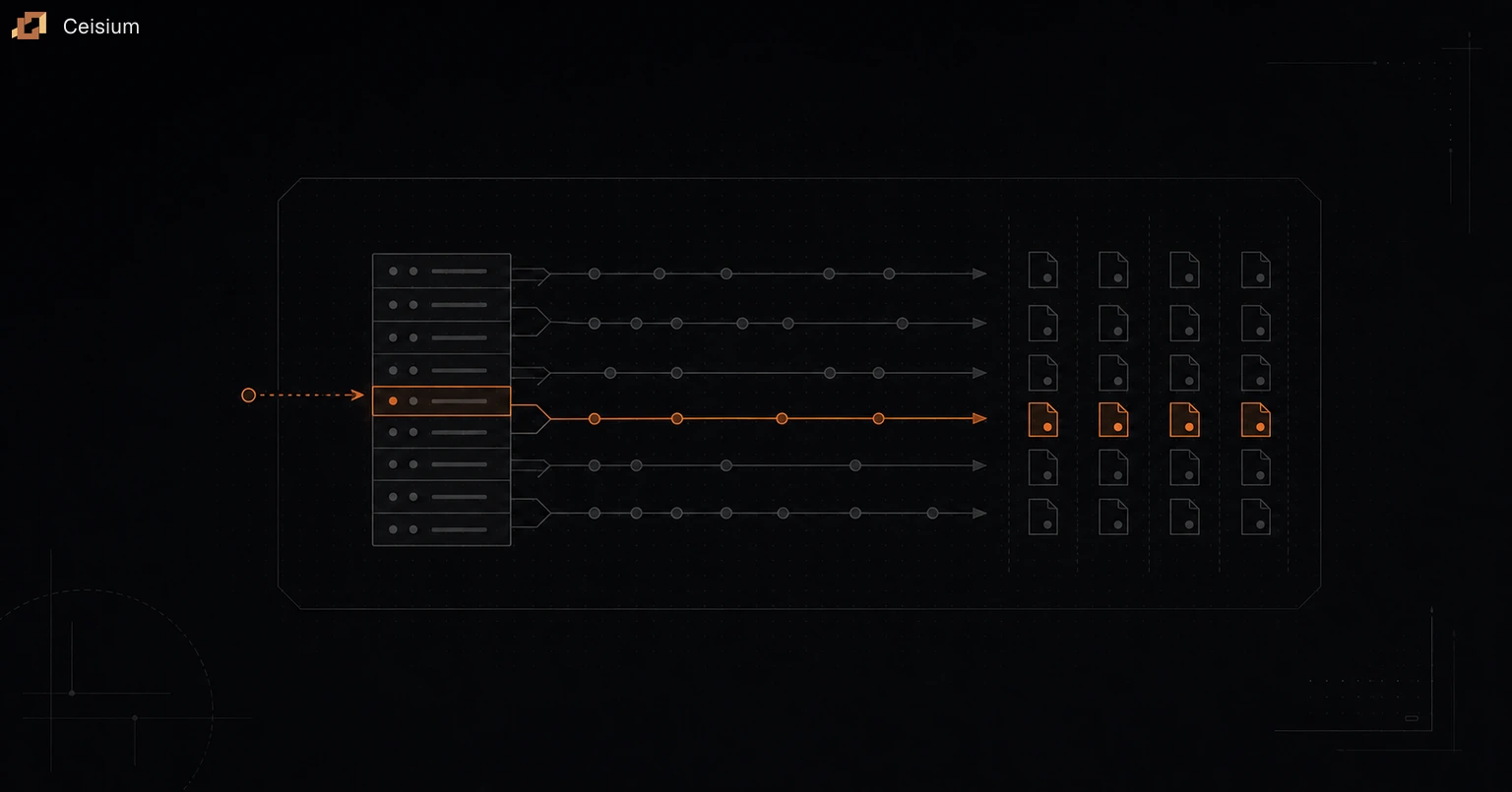
What Is an Inverted Index?
An inverted index maps terms to the documents that contain them, helping search engines find text matches without scanning every page.
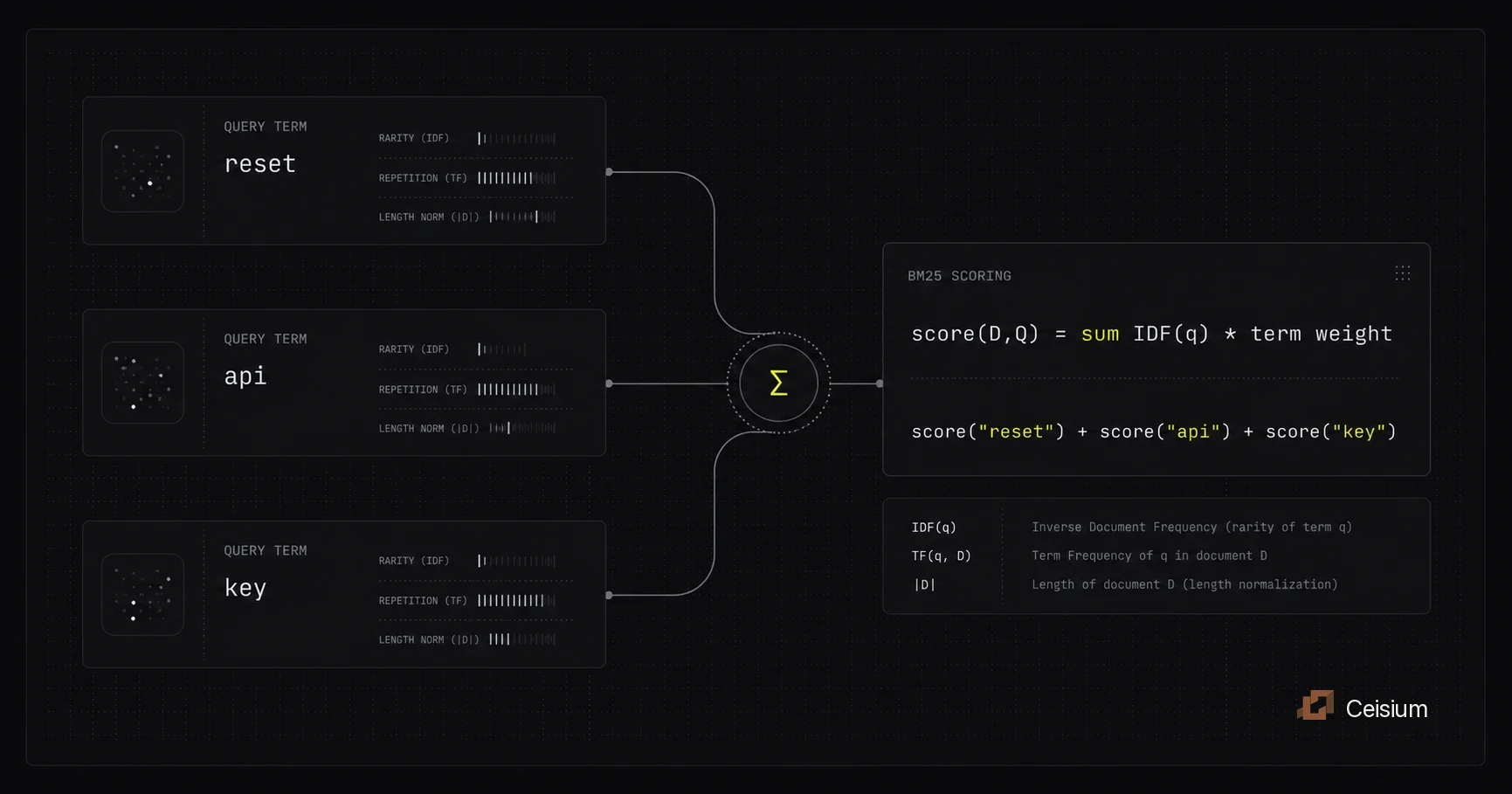
What is BM25? A Plain English Guide
BM25 is a keyword search ranking function that scores documents using term frequency, term rarity, and document length. Learn how it works, where it helps, and how it differs from TF-IDF.
BM25 in RAG: Why Exact Keywords Still Matter
Dense retrieval can miss error codes, identifiers, and exact phrases. BM25 gives RAG systems another path to the source evidence they need.